The Echoes of Stone: A Deep Dive into Dong Van Old Quarter
Dong Van Old Town is the cultural heart of Ha Giang’s rocky highlands
1. The Gateway to the Past
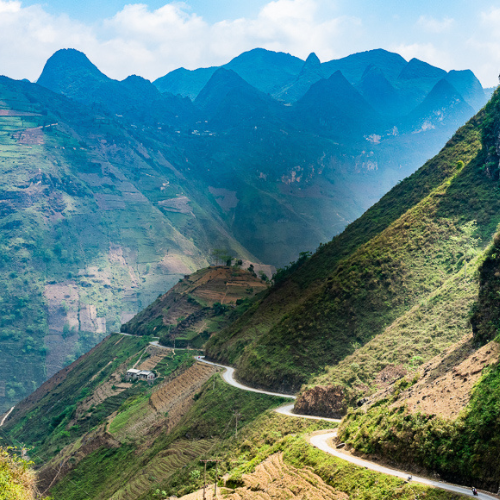
Nestled in the heart of the “Grey Desert”—the Dong Van Karst Plateau—lies a small valley that feels like a wrinkle in time. This is the Dong Van Old Quarter (Phố Cổ Đồng Văn). While the rest of the world rushes toward the future, this enclave of century-old houses remains a sanctuary of limestone, clay, and history. For the traveler finishing a long day of riding the Ma Pi Leng Pass, the Old Quarter isn’t just a stop; it is the soul of the northern frontier.
2. A Century of Architecture: The “Yin and Yang” of the North
The architecture of Dong Van Old Quarter is a visual dialogue between the earth and the people. The street is lined with about 40 ancient houses, most of which were built in the early 20th century.
-
The Walls (Trình Tường): These are not made of brick but of pounded earth. The thick, ochre-colored walls keep the interiors warm during the brutal mountain winters and cool during the summer heat.
-
The Roofs: Covered in “Yin and Yang” (Ngói Âm Dương) tiles, the roofs are moss-covered and curved, resembling the scales of a sleeping dragon.
-
The Layout: Most houses follow a “U” shape with an open courtyard in the middle, reflecting the influence of Southern Chinese architecture blended with local H’mong traditions.
3. The Sensory Symphony of the Morning Market
To truly experience Dong Van, you must wake up at 5:00 AM on a Sunday. The quiet Old Quarter transforms into a riot of color and sound.
-
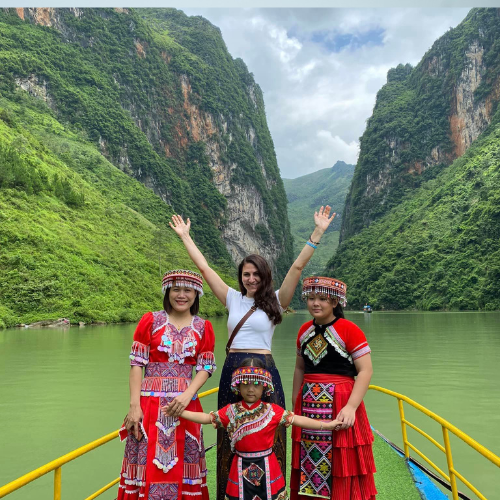
The Colors: Thousands of H’mong, Dao, and Lo Lo people descend from the mountains in their finest traditional attire. The vibrant pinks, deep indigos, and neon greens of their dresses contrast sharply against the grey limestone backdrop.
-
The Flavors: The air is thick with the steam of Thắng Cố (a traditional horse meat soup) and the sweet scent of Bánh Tam Giác Mạch (Buckwheat cakes).
-
The Trade: It is a place where people sell everything from hand-woven hemp textiles to mountain herbs, cattle, and even colorful songbirds. It is one of the few places left in Vietnam where the market is a social event, not just a transaction.
4. Café Phố Cổ: A Living Museum
At the edge of the market square stands a grand house that once belonged to a wealthy landlord. Today, it is Café Phố Cổ, the most iconic landmark in the quarter.
-
Sitting inside, you can see the original wooden pillars and the red lanterns that cast a warm glow over the stone walls.
-
Climbing to the second floor gives you a panoramic view of the ancient rooftops. From here, you can watch the mist roll over the “Don Cao” fortress in the distance, realizing that this town has survived wars, isolation, and the passage of empires.
5. The Spirit of “Đêm Phố Cổ” (Old Quarter Nights)
When the sun dips behind the karst peaks, the atmosphere shifts. On the 14th, 15th, and 16th days of the lunar month, the quarter holds “Old Quarter Night.”
-
The electric lights are dimmed, replaced by the flickering glow of traditional lanterns.
-
Local elders play the Khen (H’mong panpipes), its haunting melody echoing off the stone walls.
-
Travelers and locals gather around communal fires to drink Rượu Ngô (Corn Wine), sharing stories that bridge the gap between different worlds.
6. The Heart of Human Connection
What makes Dong Van Old Quarter special is not just the stone and wood; it is the persistence of the people. Despite the influx of tourism, you will still see a H’mong grandmother sitting on her doorstep spinning hemp, or children playing with wooden carts in the alleyways. The town hasn’t become a “museum piece”—it is a living, breathing community that has integrated modern hospitality without losing its ancestral rhythm.
More Than Just a Destination
Dong Van Old Quarter is the heartbeat of Ha Giang. It is a reminder that beauty often comes from hardship—that houses made of mud and roofs made of clay can outlast the grandest cities. For those who travel the Ha Giang Loop, this town is the anchor. It is the place where you wash the dust off your face, warm your hands by the fire, and listen to the ancient stones tell their stories.